How Vendor Support Timelines Influence Charge Structures in Multi-Platform Authorization Flows
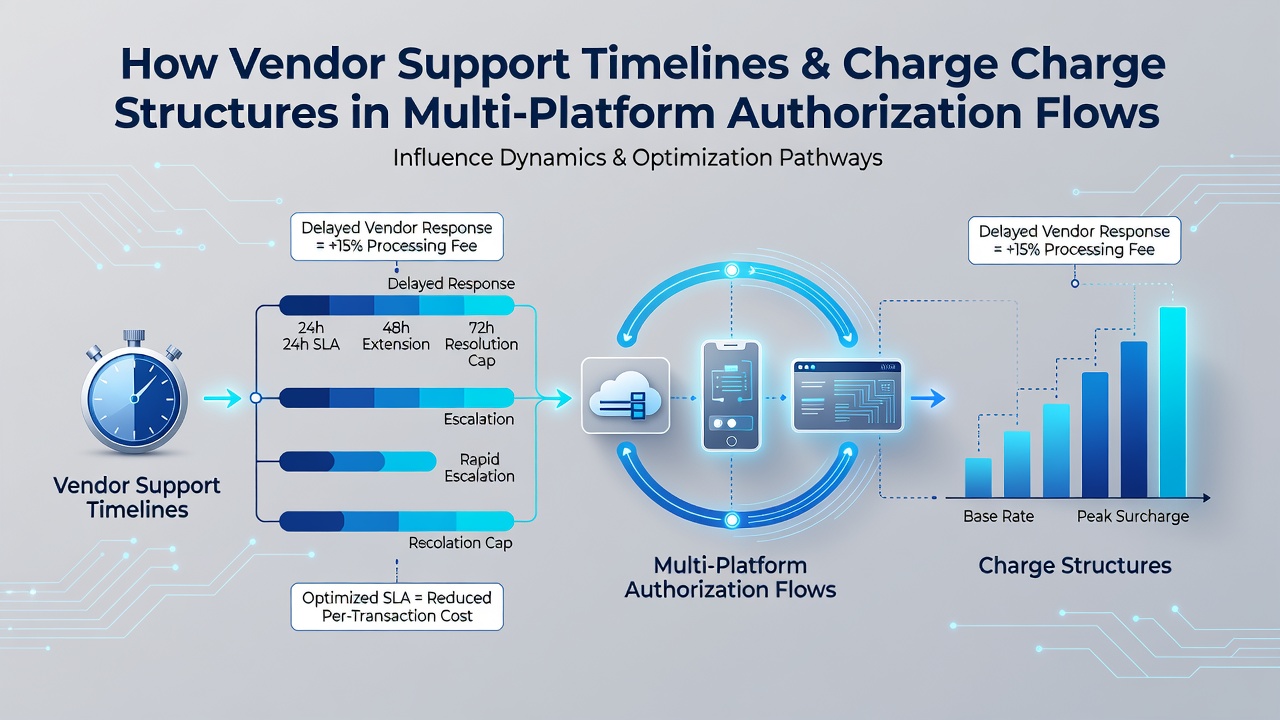
Data from payment infrastructure analyses shows that vendor support timelines directly shape the fee models applied to authorization requests processed across web, mobile, and embedded systems. When a vendor announces an end-of-support date for a particular authentication protocol or API version, processors adjust their pricing tiers to account for the increased operational overhead associated with maintaining legacy pathways until migration completes.
Understanding Authorization Flows in Distributed Environments
Authorization flows in multi-platform setups involve sequential handoffs between merchant systems, payment gateways, and issuing banks, where each step validates credentials and reserves funds before final settlement occurs. Researchers at institutions tracking global transaction networks have documented how these sequences span different device types and operating systems, creating dependencies on vendor-maintained libraries that handle token generation and response validation. When support for an older library version winds down, the cost of sustaining secure connections through that channel rises because fewer organizations share the maintenance burden, and this expense gets passed along through elevated per-transaction charges.
Timeline Pressures and Fee Adjustments
Observers tracking industry shifts note that vendors typically provide 18 to 36 months of notice before withdrawing support from specific authorization components, and during this window organizations must decide whether to migrate immediately or absorb higher fees for continued access. In October 2026 several major platform providers plan to phase out legacy OAuth 1.0 implementations that still underpin certain embedded retail terminals, prompting processors to introduce surcharge categories specifically for traffic routed through those channels. Studies compiled by European payment standards bodies indicate that merchants delaying migration beyond the midpoint of a vendor timeline face compounded rate increases of 12 to 18 percent on authorization attempts, because the remaining active users shoulder a larger share of compliance and security patching expenses.
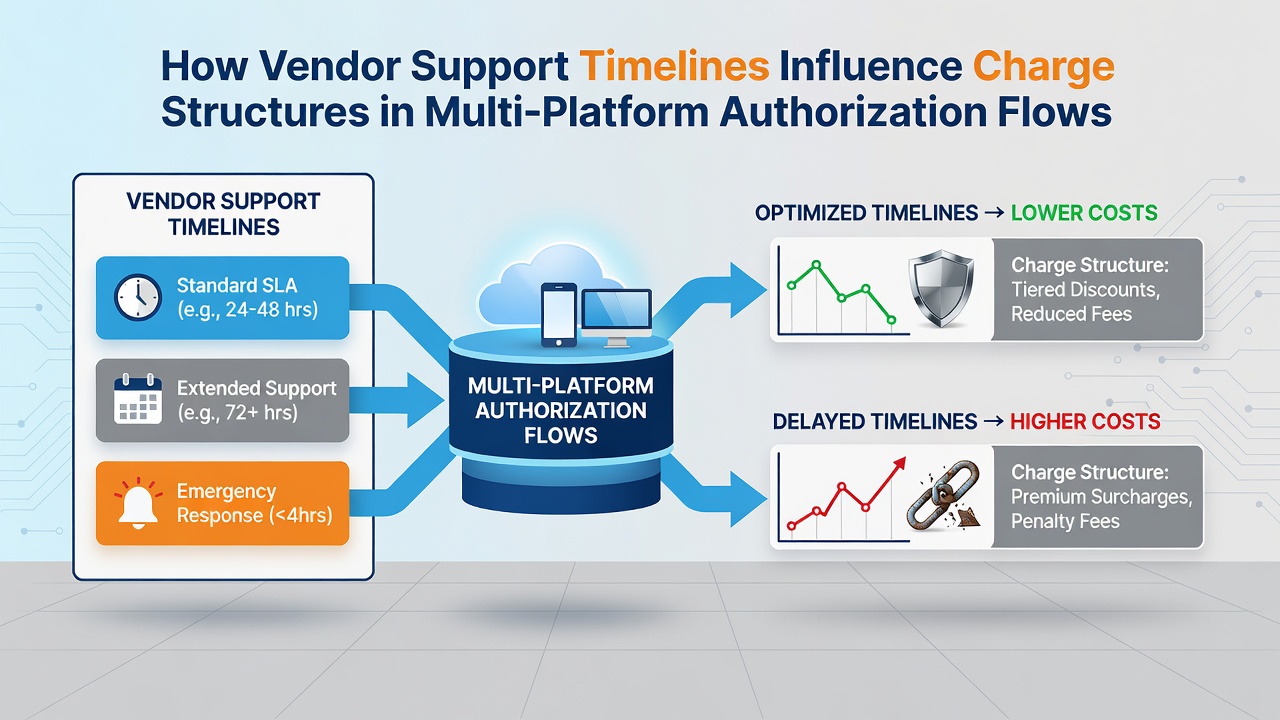
Those who have examined transaction logs across regions report that charge structures evolve in predictable stages tied to the support calendar. Early in the timeline, when announcements first appear, processors introduce modest uplift fees labeled as transition support; midway through, additional tiers emerge for high-volume legacy flows; and near the cutoff date, flat surcharges apply to any remaining traffic until full deprecation. Data collected by the Reserve Bank of Australia reveals similar patterns in cross-border mobile authorization streams, where vendors coordinating with regional banks align their deprecation schedules to minimize simultaneous disruptions yet still generate measurable shifts in per-authorization pricing.
Platform-Specific Impacts and Migration Economics
Multi-platform environments amplify these effects because an authorization request initiated on a smartphone app may route through different vendor components than one started on a desktop browser or point-of-sale device. When one platform's supporting library loses coverage first, the charge differential between platforms widens, encouraging merchants to steer volume toward still-supported routes. Academic reviews of payment network data highlight cases where organizations consolidated authorization traffic onto fewer platforms during vendor transition periods, achieving measurable reductions in aggregate fees once legacy pathways were decommissioned. Regulatory filings from the Bank of Canada further illustrate how staggered vendor timelines across North American and European operations create temporary arbitrage opportunities for processors able to reroute flows before support fully expires.
What's interesting is how these dynamics interact with compliance requirements. Standards such as PCI DSS mandate continued security updates for any active authorization path, and when a vendor ceases providing patches, the burden shifts to individual processors or merchants, elevating the internal cost basis that ultimately determines published charge structures. One study of authorization latency records demonstrated that legacy paths nearing end-of-support exhibit higher failure rates, prompting processors to apply risk-based premiums on top of the base timeline-driven fees.
Regional Variations in Timeline Responses
Geographic differences appear in how quickly charge structures adapt to announced timelines. North American processors often accelerate fee adjustments within six months of a vendor notice, whereas European operators tied to SEPA frameworks tend to phase increases more gradually to align with collective migration programs. Reports issued by the Monetary Authority of Singapore document parallel behavior in Asia-Pacific markets, where vendors coordinate deprecation dates across multiple countries to allow shared infrastructure investments that temper the resulting per-authorization cost spikes.
Conclusion
Vendor support timelines function as predictable levers on charge structures within multi-platform authorization flows, prompting processors to recalibrate fees as remaining user bases shrink and maintenance responsibilities concentrate. Evidence from transaction monitoring across continents confirms that organizations monitoring these calendars in advance can optimize routing decisions and limit exposure to elevated charges. As additional deprecation events approach in late 2026, the same patterns are expected to recur, with updated fee schedules reflecting the economics of sustaining only those authorization pathways still backed by active vendor commitments.