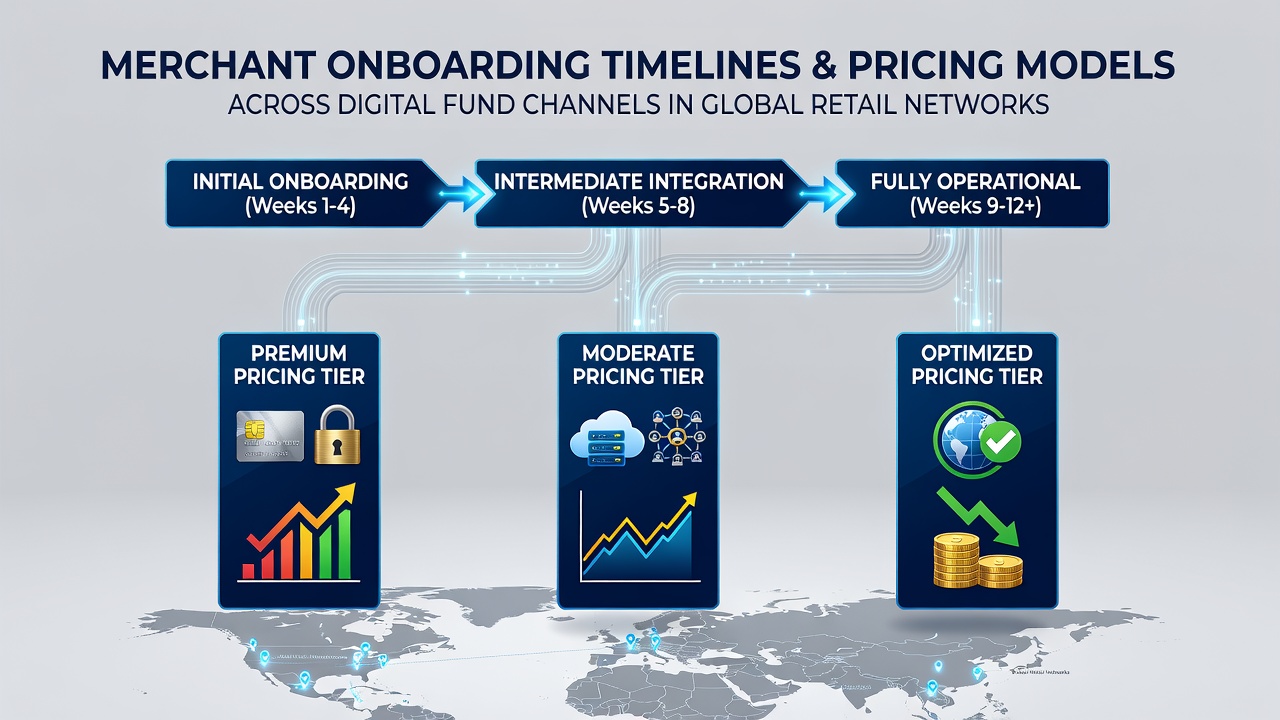
How Merchant Onboarding Timelines Shape Pricing Models Across Digital Fund Channels in Global Retail Networks
Retail networks around the world continue to integrate digital fund channels that include credit cards, instant bank transfers, and mobile wallet solutions, while merchant onboarding timelines determine how providers structure their pricing across these options. Observers note that shorter onboarding periods often lead to fixed fee arrangements that remain stable regardless of transaction volume, whereas extended verification processes prompt providers to introduce tiered pricing that adjusts based on risk assessments completed during setup. Data from payment processors indicates that the average onboarding cycle spans anywhere from two days for basic digital wallet approvals to several weeks when cross-border compliance checks enter the workflow.
Core Elements of Onboarding Processes
Verification steps such as identity confirmation, bank account linkage, and compliance screening form the foundation of these timelines, and each stage carries direct implications for how fees get calculated once the merchant activates payment acceptance. Researchers have documented cases where streamlined digital identity tools reduce onboarding from fourteen days to forty-eight hours, which in turn allows providers to offer flat-rate pricing on credit card transactions instead of percentage-based models that account for prolonged risk exposure. Those who manage multi-currency retail operations frequently encounter additional documentation requirements that extend timelines further, resulting in pricing structures that incorporate currency conversion margins from the outset.
Regional Patterns in Timeline Variations
North American networks typically complete merchant setup within five to seven business days when only domestic bank transfers are involved, yet the addition of international credit card channels can double that duration and shift pricing toward volume-based discounts that activate only after the merchant reaches specified thresholds. In contrast, European operators often embed anti-money laundering reviews that stretch timelines to three weeks, leading providers to apply surcharge models on digital fund channels until full approval clears. Australian retail systems demonstrate another approach where automated bank verification shortens onboarding to three days on average, enabling immediate access to lower interchange rates without the layered fees that appear when manual reviews dominate the process.
Observers point out that these differences create distinct pricing ecosystems, with faster regions favoring subscription-style fees that decouple costs from individual transaction values and slower regions relying on per-transaction adjustments that reflect the extended compliance burden.
Influence on Digital Fund Channel Pricing
Digital fund channels respond directly to onboarding duration because providers calibrate risk buffers into their fee schedules during the setup phase, and longer cycles give teams more time to identify potential issues that justify higher margins. Studies reveal that merchants who complete onboarding in under seventy-two hours often receive bundled pricing that covers both credit card processing and bank transfer routing at a combined rate, whereas those requiring extended review periods face separate line items for each channel that accumulate over time. The reality is that instant payment rails such as real-time bank transfers demand quicker identity checks than traditional card networks, which means providers frequently accelerate onboarding for these channels adn reward the speed with reduced per-transaction costs.
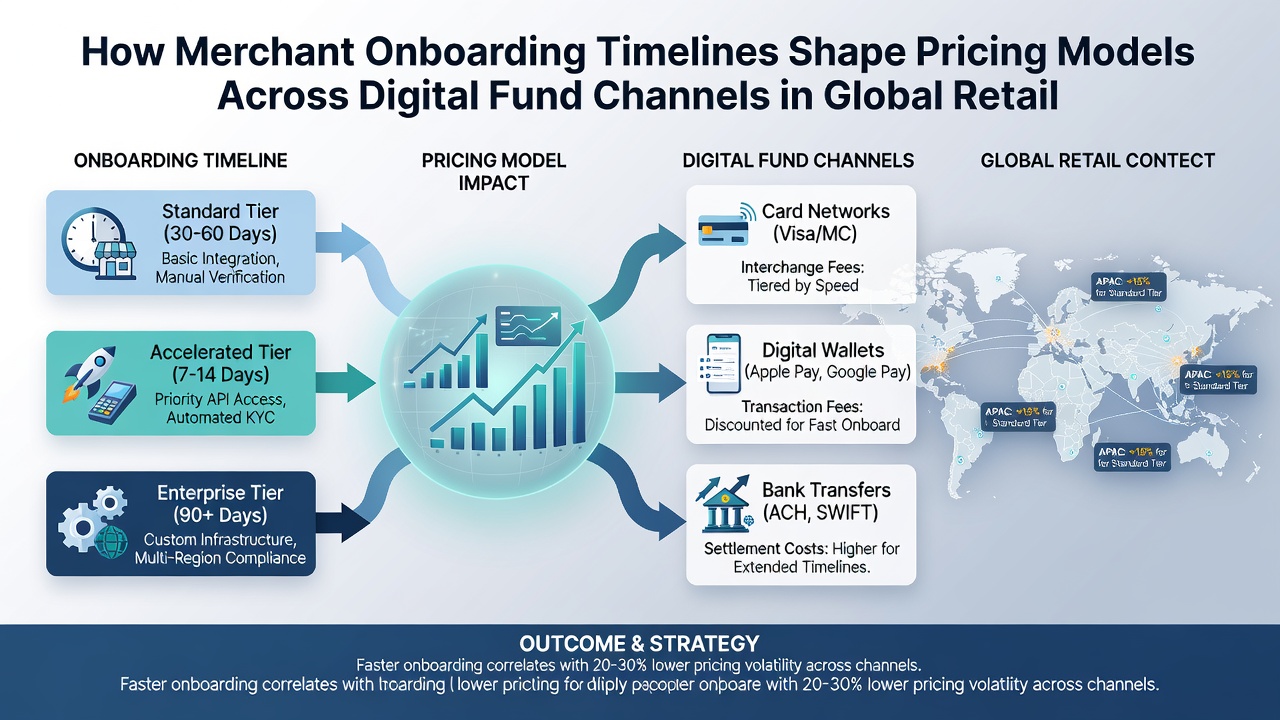
According to Federal Reserve analyses of payment system trends, networks that compress onboarding below four days report higher adoption of mobile wallet channels because the associated pricing remains competitive from day one. Yet regions where timelines stretch beyond ten days see providers offset the delay by introducing minimum monthly fees that apply until the merchant demonstrates consistent transaction patterns.
Global Retail Network Adaptations
Global retail networks coordinate these timelines across borders by aligning onboarding workflows with local regulatory calendars, and October 2026 marks a period when several jurisdictions updated their digital identity standards in ways that further compressed verification steps for approved merchants. Providers in these networks adjust pricing models accordingly, shifting from risk-loaded fees to performance-based structures once the initial onboarding window closes. Those who track multi-platform authorization flows observe that synchronized timelines across regions allow unified pricing schedules that treat credit card and bank transfer channels under the same fee umbrella rather than maintaining separate schedules for each.
Research indicates that networks operating in multiple currencies benefit when onboarding completes within a single week because providers can lock in exchange rate margins at the start rather than recalculating them after prolonged reviews. The ball remains in the court of technology providers who continue refining automated screening tools to shorten these cycles and stabilize associated costs.
Conclusion
Merchant onboarding timelines serve as a primary determinant of pricing structures across digital fund channels in global retail networks, shaping whether providers adopt fixed, tiered, or volume-linked models based on the duration required for verification and compliance. Evidence from multiple regions shows consistent patterns where faster processes correlate with bundled and competitive rates, while extended timelines introduce layered fees that reflect ongoing risk management. As networks continue to evolve their digital payment offerings, the relationship between onboarding speed and pricing flexibility remains a central factor in how costs distribute across credit cards, bank transfers, and emerging wallet solutions.