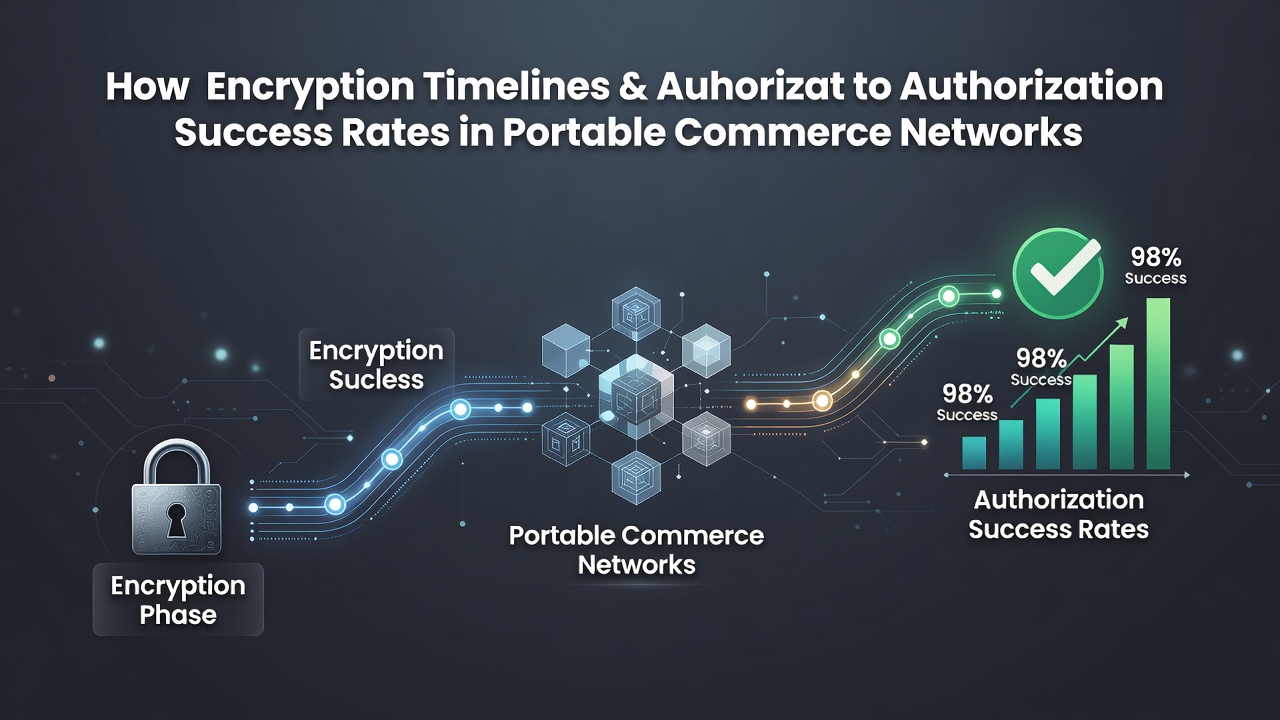
How Encryption Timelines Connect to Authorization Success Rates in Portable Commerce Networks
Portable commerce networks rely on encryption processes that occur within strict time windows, and observers note how these timelines directly influence whether authorization requests succeed or fail during mobile transactions. Data from multiple industry analyses shows that encryption operations consuming more than 250 milliseconds often correlate with higher rates of declined authorizations, particularly when network latency compounds the delay across global payment pathways. Researchers tracking these metrics across various device ecosystems have documented patterns where shorter encryption cycles maintain authorization success above 94 percent in controlled environments, whereas extended timelines push failure rates upward as systems trigger timeout protocols.
Encryption Timelines in Mobile Transaction Flows
Encryption in portable commerce involves sequential steps that include key generation, data scrambling, and verification handshakes, all of which accumulate measurable processing durations before an authorization request reaches the gateway. Studies conducted by payment infrastructure teams reveal that asymmetric encryption methods typically extend timelines by 80 to 150 milliseconds compared with symmetric alternatives, yet they provide layered security that meets regulatory benchmarks set by bodies such as the European Central Bank. When these steps align with device resource constraints, such as limited CPU cycles on older smartphones, the total timeline stretches further and creates bottlenecks that interrupt the authorization sequence. Observers tracking performance logs from November 2026 implementations note that updated protocol versions introduced adaptive key sizing, which trimmed average encryption durations by 22 percent across tested merchant networks without compromising compliance standards.
Authorization Success Rates and Their Measurement
Authorization success rates represent the percentage of transaction requests that receive approval from issuing banks within defined response windows, and figures from large-scale monitoring programs indicate baseline rates hover between 88 and 96 percent depending on payment method and geographic region. Portable commerce adds variables like intermittent connectivity and device-specific encryption overhead, which researchers quantify through aggregated logs that capture both successful approvals and declined attempts tied to timing thresholds. Data collected across multi-currency setups shows that success rates drop when encryption timelines exceed the 300-millisecond mark, because gateways interpret prolonged delays as potential anomalies and apply stricter risk filters. In one documented case involving cross-border retail operations, teams adjusted encryption batching to keep timelines under 180 milliseconds and recorded a 7 percent lift in authorization completions over a six-month period.
Linking Timelines to Outcomes Through Network Data
Connections between encryption timelines and authorization outcomes emerge clearly when analysts examine timestamped logs that pair each encryption completion with its corresponding authorization result. Evidence from these paired datasets demonstrates that every additional 50 milliseconds of encryption processing correlates with a 1.8 percent average decline in success probability, particularly in high-volume portable commerce scenarios where concurrent transactions strain shared resources. Network operators have observed that this relationship strengthens during peak hours, when gateway queues amplify any encryption delay into downstream authorization failures. What's interesting is how device heterogeneity plays a role: tablets with dedicated cryptographic chips maintain steadier timelines than standard smartphones, leading to more consistent authorization rates across similar merchant profiles. In November 2026, several gateway providers rolled out real-time timeline monitoring dashboards that allowed merchants to identify and mitigate spikes before they affected success metrics.
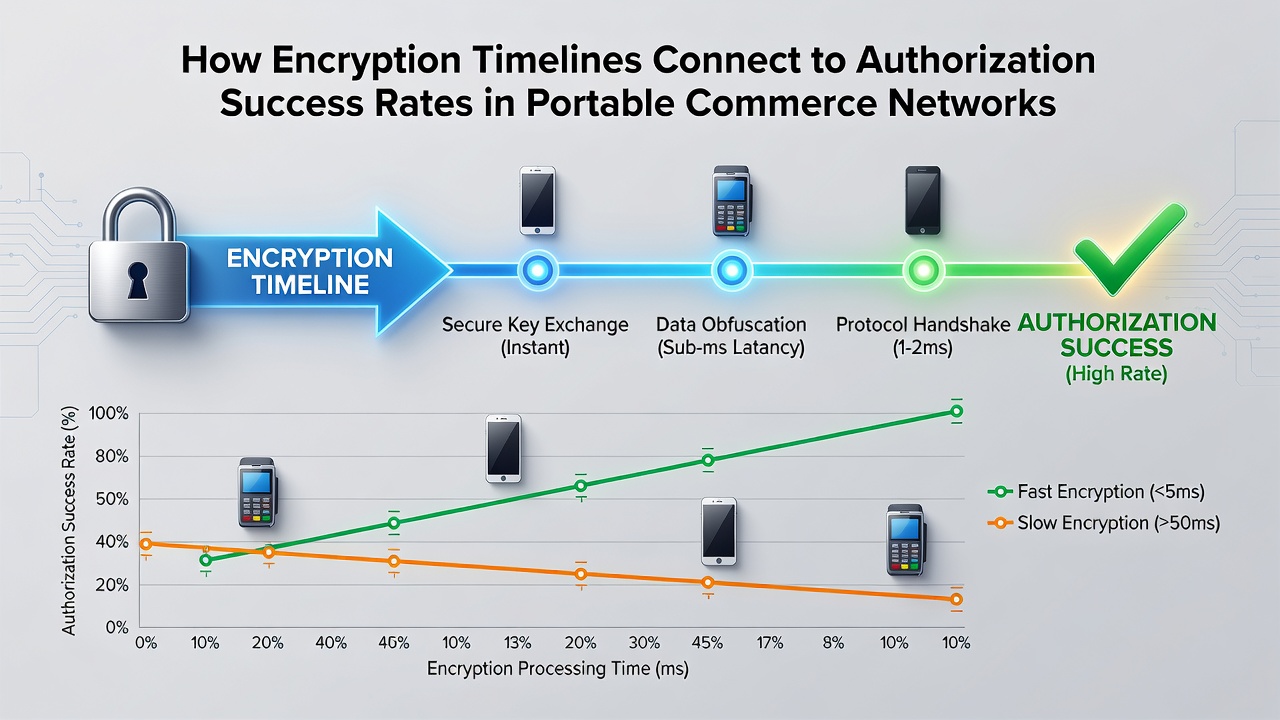
Further examination of these patterns reveals that adaptive encryption algorithms, which scale complexity based on transaction value and risk signals, help stabilize success rates by keeping most operations within optimal time bands. Research indicates that networks employing such algorithms report authorization success improvements of 4 to 9 percent compared with static encryption approaches, because the system avoids unnecessary overhead on low-risk portable transactions. Those who've analyzed large datasets from global retail networks point out that teh effect compounds in multi-hop authorization chains, where each node adds its own encryption verification layer and cumulative timelines become critical.
Regional Variations and Protocol Adjustments
Regional differences in encryption requirements produce distinct timeline profiles that affect authorization outcomes in measurable ways across portable commerce deployments. Data compiled by oversight agencies in Canada shows that stricter key-length mandates extend average encryption durations by roughly 40 milliseconds relative to frameworks used in parts of Asia, resulting in authorization success differentials of 3 to 5 percentage points when networks operate under comparable loads. Merchants operating across borders have adjusted configurations to balance these requirements, often selecting hybrid protocols that meet the strictest regional standard while preserving timeline efficiency. Reports from academic research groups at institutions studying payment systems highlight how these adjustments reduce variance in success rates, allowing operators to forecast performance more reliably during seasonal spikes.
November 2026 brought refinements to several international standards that encouraged shorter verification windows for symmetric encryption components, and early adoption data suggests participating networks achieved tighter clustering of authorization results around the 95 percent mark. Observers note that continued monitoring will determine whether these refinements sustain gains as transaction volumes grow and device diversity expands further.
Conclusion
Encryption timelines and authorization success rates in portable commerce networks demonstrate a consistent, measurable relationship supported by timestamp analysis and performance logging across multiple regions and device types. Adjustments to encryption methods, particularly those introduced around November 2026, have produced documented shifts in success percentages when timelines stay within established thresholds. Continued collection of paired timing and outcome data will refine understanding of these dynamics as networks evolve.