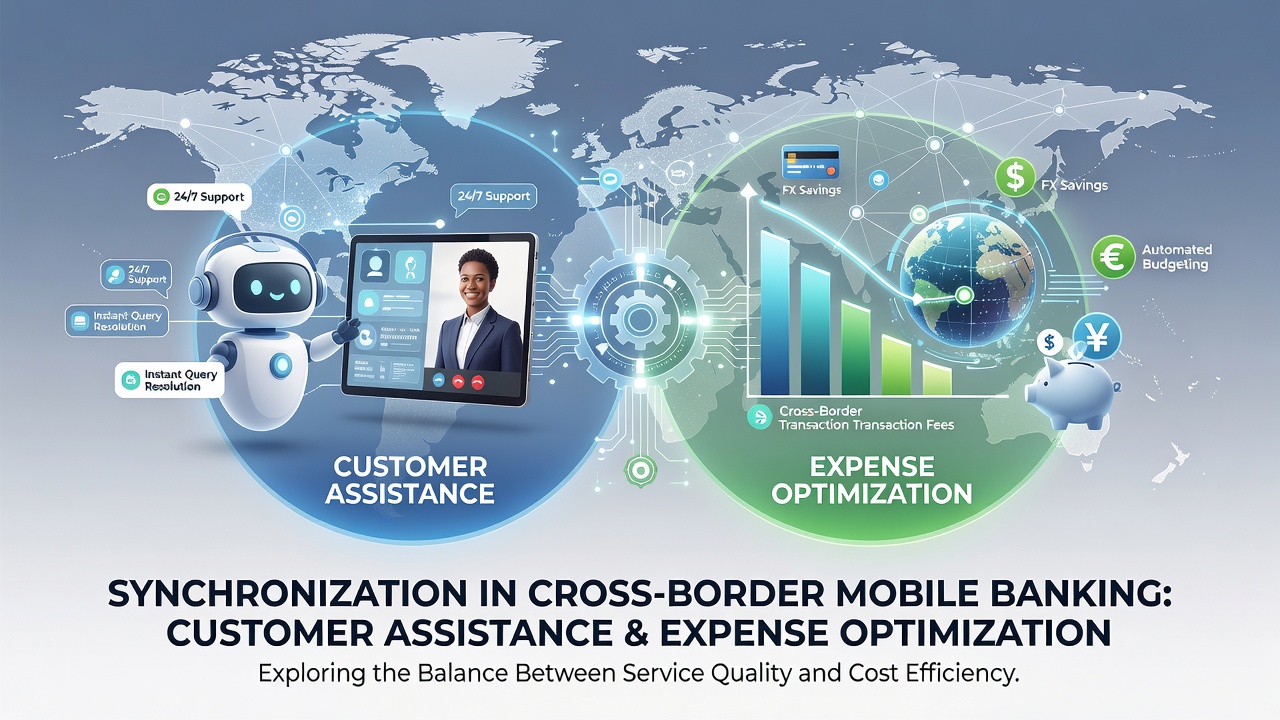
Exploring Synchronization Between Customer Assistance and Expense Optimization in Cross-Border Mobile Banking Operations
Financial institutions handling cross-border mobile banking have started aligning customer assistance platforms with expense optimization tools to manage transaction flows more precisely, and this coordination draws on data from systems that track support queries alongside cost variables such as currency conversion fees and settlement times. Observers note that when support teams receive real-time access to expense metrics, they resolve issues like delayed transfers or fee disputes faster while keeping operational overhead lower, since agents avoid redundant checks across separate databases. Research from the Bank for International Settlements indicates that institutions adopting such integrated approaches reduced average handling times for international queries by measurable margins during 2025, with similar patterns expected to continue into October 2026 as mobile volumes rise.
Core Elements of Integration
Customer assistance in mobile banking typically covers query resolution for account access, transfer confirmations, and compliance checks, whereas expense optimization focuses on minimizing per-transaction costs through route selection, fee negotiation with partners, and predictive modeling of exchange rate fluctuations. Synchronization occurs when these functions share data streams, allowing support staff to reference live cost models during calls or chat sessions. Those who've studied platform architectures point out that application programming interfaces connect ticketing systems to expense dashboards, so an agent handling a complaint about a high conversion fee can immediately pull data on alternative corridors that lower the charge without extra steps. Studies from the European Central Bank have documented cases where this linkage cut support-related expenses by aligning response protocols with cost-saving rules, particularly in corridors involving multiple currencies.
Data Flows and Operational Adjustments
Real-time synchronization relies on centralized databases that update both support logs and expense trackers simultaneously, which means when a user initiates a cross-border transfer via a mobile app, the system logs potential cost factors like network latency or intermediary bank charges at the same moment it flags any assistance needs. People often find that automated alerts notify support teams about unusual expense spikes, enabling proactive outreach instead of reactive fixes after complaints arrive. Figures from industry reports show institutions using these combined systems processed higher volumes of mobile transactions in 2025 without proportional increases in support staffing, because fewer escalations reached higher-cost manual review stages. In October 2026 analysts anticipate further gains as machine learning refines the predictions that link assistance patterns to expense outcomes.

Regional Implementation Patterns
Institutions in Asia-Pacific markets have applied these synchronized models to corridors with high remittance traffic, where support agents use expense data to guide users toward lower-fee timing windows during volatile market periods. North American and European operators meanwhile focus on regulatory reporting requirements, embedding compliance checks into the same platforms that track cost reductions so that customer queries about documentation do not generate separate administrative expenses. Research indicates that unified systems decrease duplicate data entry across departments, and this efficiency shows up in lower overall processing costs per transaction. Observers tracking these developments note that October 2026 will likely bring expanded testing of such frameworks as new settlement protocols emerge.
Measured Outcomes and Tracking Methods
Performance tracking combines key indicators from both areas, including average response time for support tickets alongside per-transaction expense ratios, and institutions review these metrics jointly during periodic audits. Data shows that when synchronization reaches higher levels, the frequency of cost-related complaints drops because agents resolve issues with accurate information on the first contact. One study revealed that organizations employing shared dashboards recorded consistent reductions in fraud-related losses, since support teams spot anomalies faster when expense patterns appear alongside user reports. External benchmarks from sources like the Federal Reserve Bank of New York provide comparative figures across regions, helping institutions calibrate their own integrated approaches without isolated trial-and-error phases.
Conclusion
The alignment of customer assistance functions with expense optimization strategies in cross-border mobile banking continues to evolve through shared data architectures and coordinated response protocols, and evidence from regulatory and research bodies confirms measurable impacts on handling efficiency and transaction costs. Institutions monitoring developments through October 2026 will likely see further refinements as volumes grow and new tools integrate deeper into existing platforms.